TL;DR
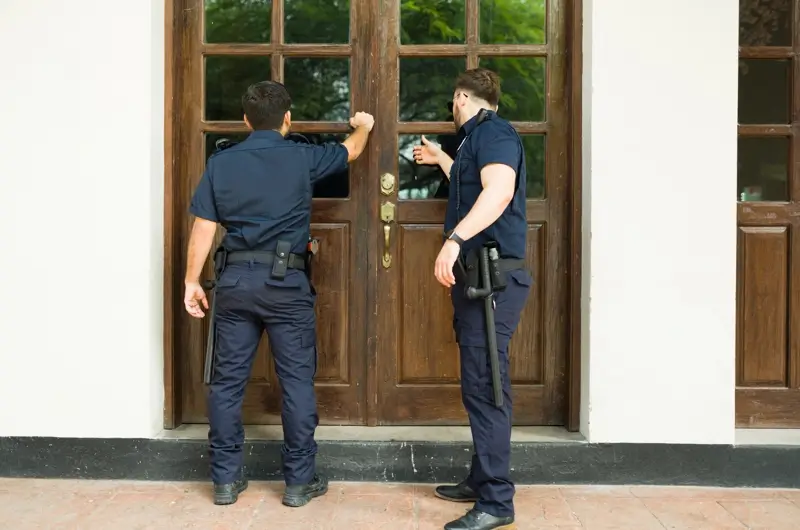
If police show up at your home, do not panic, do not invite them in, and do not start explaining anything. In Texas, an arrest warrant and a search warrant are different, and consent from someone inside the home can change the situation fast. Ask what kind of warrant they claim to have, ask to see it, keep the conversation short, and make your refusal to consent clear. If officers want entry, a statement, a phone, or a family member, call a lawyer immediately.

Police At Your Door Without A Warrant
You do not have to treat every knock like officers automatically have the right to come inside. A home gets the strongest Fourth Amendment protection, but there are exceptions, including consent, emergencies involving threats to life or safety such as domestic violence, and certain warrant situations.
What you say, what your spouse says, whether a roommate opens the door wider, and whether someone blurts out “come in” can all matter. That is why the first issue is simple: find out whether they are claiming an arrest warrant, a search warrant, or no warrant at all.
What To Say Through The Door?
Opening the door to talk is not the same thing as consenting to entry, but families erase that line by accident. The safer move is to keep the conversation short and controlled. You can say, “Officer, I do not consent to any search. Do you have a warrant?” If they start asking questions, say, “I am invoking my right to remain silent. I want a lawyer before any questioning.”
Also do not explain who is home, who owns what room, whose car is outside, or where someone “might have gone.” Do not step aside, gesture at them in, or say “come in and let’s talk.” Consent is one of the main exceptions to the warrant requirement, and the Justice Department has long described voluntary consent from a person with authority over the premises as a basis for a warrantless search.
Stay Calm & Ask What Warrant They Have
If the police mention that they have a warrant, you should focus on identifying the type of warrant and what it allows them to do. Texas warrant rules define an arrest warrant as a written order from a magistrate, and the warrant must identify the person to be arrested, name the offense, and bear the magistrate’s signature. It also says that when officers execute an arrest warrant, they must make known the authority for the arrest, and if you ask, they must show the warrant, even though they do not have to physically possess it at the exact moment of arrest.
A search warrant is different. It is a magistrate’s written order directing officers to search for and seize specified property based on probable cause supported by an affidavit.
So verify before you do anything else. Ask, “Is this an arrest warrant or a search warrant?” Ask whose name is on it. Ask what address is listed. Ask them to hold it up to the window, camera, or peephole, or slide a copy under the door if they are willing.
If they say it is an arrest warrant, remember that does not automatically mean they can search every room for evidence. If they say it is a search warrant, read what place and what items it covers. And if they have an arrest warrant for someone who does not live there, the law is more complicated. Federal guidance based on Payton and Steagald treats entry into the suspect’s own home differently from entry into a third party’s home.
How To Handle The Rest Of The Family
One calm adult should do the talking while everyone else should stay quiet, stay back, and stop trying to help. Children should be moved away from the door. A spouse or roommate should not start answering questions from another angle. Nobody should go looking for papers, phones, bags, or keys unless a lawyer has advised it or officers are already lawfully directing it. And nobody should lie. A bad answer, a panicked “he’s not here,” or a rushed attempt to hide something can turn a bad moment into a worse case.
If officers say they are coming in anyway because of a warrant or an emergency, do not physically resist them. Make your position clear in plain English: “I do not consent to this entry or search.” Then stop talking and start observing. Watch which officers enter, what rooms they go into, whether they show a warrant, and what they take. Ask for names, badge numbers, and a copy of any inventory or paperwork before they leave.
Emergencies can justify warrantless entry in some situations, especially where officers reasonably believe immediate action is needed to protect life or stop ongoing violence, so the argument is usually preserved by a clear verbal objection, not by blocking the doorway.
Consent Mistakes Can Expand What Police Do
The biggest mistake is thinking only the target matters. In shared homes, police often look for permission from whoever opens the door first. Federal authorities have repeatedly argued that a co-occupant with common authority can give valid consent to search common areas.
Then, the families need one simple rule: nobody consents, nobody chats, nobody volunteers access. A spouse should not say, “You can look around.” A roommate should not say, “His room is back there.” A parent should not hand over a son’s phone and say, “We have nothing to hide.”
Another mistake is confusing an arrest warrant with a full search pass. Officers with an arrest warrant for a person who lives there may claim authority to enter if they reasonably believe that person is inside, but that still is not the same thing as a broad evidence search. And if officers are at the home of a spouse, parent, or roommate who is not the target, the law can require more than an arrest warrant.
That distinction matters in real life because many distressed families assume any warrant lets police search everything. It does not. The exact document, the exact address, and the exact person named all matter.
If officers say they have a warrant, want to come inside, ask to search, ask questions, request a phone or computer, or say cooperation will fix the situation, get legal guidance immediately. The biggest damage often happens early, when someone makes a rushed statement or a family member gives consent that cannot be taken back.
Protect Your Home & Your Rights Now
If police arrive at your door while you are home with your spouse, children, parents, or roommates, the pressure can build fast. Schedule a confidential evaluation with Arlington Criminal Attorneys before anyone in the house says too much, gives consent, or hands anything over.
We can evaluate the warrant issue, the officers’ conduct at the door, any request to enter or search, and the immediate steps needed to protect the person under investigation and the rest of the family from avoidable legal damage.